
THE GODLESS COUNTRY
Why has Everything in Canada Gone Wrong?

Through the past decade, Canada has devolved as a democratic nation, dynamic economy, and respected international country. Today, Canada is an unserious country and the primary causes of its deterioration appear to be the Liberal Party’s pernicious agendas and its unaccountable bureaucracy. It is difficult to get a clear picture of just how badly our country is governed, but here are few snapshots from the past several weeks of insanity occurring almost daily within the Carney government.
The PM recently failed to inform Canadians about Iranian Regime bombing. On 1 March, days after the Iran War broke out, a Canadian Forces air base was bombed in Kuwait. This news was kept from Canadians for weeks. Through early March, PM Carney’s conflicting statements about Canada’s support for the U.S. and Israel led strikes on the murderous Iranian regime were roundly criticized, even by backbenchers within the Liberal caucus. When Carney was questioned by media on 12 March about why he concealed the bombing from us, he fumbled this excuse:
“Well, ah, I mean not the only spokesperson for the government, ah but…”
The PM’s misconduct was shielded by government-subsidized mainstream media, and so the matter did not survive even a 24 hour news cycle.
Next consider what the PM has said about human rights concerns. In his early January meetings with CCP leader Xi Jinping, Carney stated that he raised Canadian concerns about CCP human rights violations. At a Beijing media conference, when asked about what was said during the meeting, Carney emphatically stated:
“Yes we discussed this…The issues were raised in our broader concerns over the past few days…We had a clear exchange.”
However, the PM’s Privy Council records of the meetings, tabled in Parliament on 13 March state:
“Topics of human rights and foreign interference were not brought up proactively by the Canadian Prime Minister.”
This directly contradicted what Carney told us; but of course, this lie could not stand, and so the Privy Council Office resubmitted its records to MPs, stating that there had been a clerical error by an unnamed clerk. We are now told that the PM took Xi Jinping to task for human rights abuses, after all.
Details regarding Canada-CCP shared policing is also being withheld from us. Opposition MPs have been asking the government to share details of the agreement Carney signed with the CCP on law enforcement cooperation and intelligence gathering. Canadians need to understand what has been agreed to in the secret intel sharing deal, especially the Chinese diaspora community. What does the agreement mean for existing police stations already on Canadian soil? Safety Minister Gary Anandasangaree and the RCMP are simply repeating claims that the agreement is not a public document, and so we are left wondering what activities the CCP’s Ministry of Public Security will be conducting with our local law enforcement agencies. Canada already has more CCP diplomats per capita than any other nation on earth.
Opposition MPs are also pleading with the Carney government to take action respecting hundreds of Islamic Revolutionary Guard Corps (IRGC) agents active within Canada. The IRGC is part of the Iranian armed forces and are using Canada as a safe haven to organize, fundraise, and terrorize diaspora communities here in Canada. The Carney government has done absolutely nothing to stop IRGC and other known terrorist organizations like Hamas and Hezbollah. Even as Christian churches continue to burn, bullets riddle businesses and homes, and street protests become a matter of public safety, this government refuses to respond to the escalating violence. Just recently, the U.S. sanctioned a Canadian based company for funding Hezbollah; and yet Foreign Affairs Minister Anita Anand refused to take any media questions concerning the affair. Evidently, ensuring our safety is no longer a core duty of our federal government.
The Liberals also continue to politicize our Justice system. This reality was punctuated recently when MPs voted on a series of four CPC public safety measures designed to strengthen law and order in Canada. In each case, Liberal MPs voted down bills that would have:
(1) stopped judges from giving lenient sentences to non-citizens convicted of serious crimes because of their deportation risk;
(2) Ended the re-victimization of families at parole hearings;
(3) Repealed Liberal laws permitting catch and release bail for habitual violent offenders; &
(4) Set tougher sentences for sex offenders.
Just as the Liberals reasserted their soft on crime agenda, the Justice Minister publicly stated that he will not consider Provincial Premiers’ requests for more input in selection of Canadian judges. Adding insult to injury, Carney has asked the Supreme Court, which has no Constitutional authority whatsoever to do so, to prohibit provincial governments from invoking the Notwithstanding Clause. Then they voted in favour of Bill C-9, which criminalizes public citation of the Holy Bible as some sort of “hate speech”.
How about the economy then? Surely this brilliant banker will have some promising news for Canadians on this front? Hardly. April Fools! The next carbon tax hike is coming. Canada’s industrial carbon tax is being hiked from $95 per tonne of emissions to $110. It is scheduled to reach $170 per tonne by 2030. Only Canada has such a tax. No other G7 nations has one, because there is no causal relationship whatsoever between a tax on consumption and reduction of CO2. All businesses paying this consumption tax incur higher energy costs that economists predict will cut investment, spike consumer prices, and further decrease already stagnant economic activity in Canada. The Fraser Institute forecasts that the industrial carbon tax will cost the average Canadian worker $1,160.00 in lost annual income and eliminate 50k private sector jobs by 2030. Despite this, Carney’s absurd commitment to his carbon tax regime and net-zero schemes persist—to the tangible detriment of Canadian business and taxpaying consumers.
Quite understandably, those who can leave Canada are escaping en masse. The Bank of Canada recently issued a report showing that 40% of Canadians capable of making first percentile U.S. earnings have gone stateside. Professionals, wealthier Canadians, and educated talent are evacuating. This is a serious brain drain of Canada’s present and future business leaders. It is what happens when you tax, regulate, and penalize success for a decade. The most ambitious do not stay and fight the system. They just leave. Now, sadly, the Liberal policies that have exacerbated this exodus through the Trudeau years have largely remained with Carney.
Incredibly, the Liberals seem oblivious to our daily reality as Canadians. They are deaf to our cries of an affordability crisis. The Carney government is charting the same higher-spending-central-industrial-planning course established by disastrous Trudeau era policies, and Canada is falling behind. We are currently the only G-7 nation with a shrinking economy. Just this past week, Canadians heard news from Food Banks Canada that children make up 33% of food bank visits in Canada; and Statistics Canada reported that the growth rate of the number of active businesses was nearly zero in 2025. It appears that what is happening on Main Street Canada is not being acknowledged from the comfy Liberal offices on Parliament Hill. This new government is looking rather like the old one. Despite the fact he was a key player in the Trudeau regime since 2020, PM Carney likes to repeat that his is a ‘new’ government. This is simply an insult to intelligence when the Carney Cabinet is a roll call of Trudeau era Ministers: LeBlanc, Joly, Anand, Champagne, Fraser, Hajdu, of course, Marc Miller. Then there are those recently rewarded Trudeau ministers: Lametti, Blair, and Freeland.
The PM marks his one year milestone in office with some dubious records. It was fitting that Carney celebrated his first anniversary as PM while in London, England. He held court with his friend, King Charles III. In Carney’s inaugural year, he set a record by taking 17 official foreign trips and visiting 25 countries. Some, like England, Paris, and Rome, were repeat visits. His government set a record for sitting the fewest number of days in Parliament (97). Carney is the first PM to hold three passports and has attained distinction as the only PM to strategically antagonize the U.S., even while moving his own company headquarters from Toronto to New York. It is therefore rank and file Canadians who will need to sacrifice as our nation pivots into a New World Order; and despite these obvious conflicts and hypocrisy, the latest polls show most Canadians adoring their jet-setting PM.
Such is the madness in Ottawa. What is happening there would be scandalous and criminal, if only anyone cared. There is the rub; perhaps we are exhausted beyond caring—which speaks to the reality that Canada is now an unserious country. But if this is true, then we must first ask why it is so, and then discover the antidote to our shared national chaos.
A huge part of the explanation for the national malaise is our descent into materialism and godlessness. After all, the demand for justice makes no sense in a Godless universe. We all possess a remarkable and universal instinct: when confronted with profound evil, we demand justice. When children are abused, when tyrants slaughter the innocent, or when government corruption destroys lives, we do not simply shrug our shoulders and say that we ‘dislike’ such things. We insist that they are wrong. We know that they should not happen and that those responsible for such atrocities need to be held accountable. This reaction is not just emotional; it also carries moral weight. We speak as though there is a real standard of justice that has been violated. We assume that good and evil are not mere personal preferences, but objective realities. The problem is that this potent human instinct creates a serious difficulty for a strictly materialist worldview like the one that many Canadians have adopted.
Materialism claims that reality consists only of matter, energy, and the physical laws governing them. Viewed from this perspective, the universe has no inherent purpose or moral structure. Human beings arise from unguided Darwinian processes. Our thoughts, beliefs, and moral instincts are just byproducts of random chemical reactions in brains shaped by natural selection. Once this description of reality is accepted, moral categories like good and evil cease to exist as objective truths. They become mere evolutionary strategies that helped humans to survive. Feelings of moral outrage become psychological adaptations rather than real moral violations. In a universe composed only of atoms and physical forces, there is no moral lawgiver, no ultimate standard of justice, and no final accountability. Physics does not care about genocide. Chemistry does not condemn corruption. The universe simply continues its natural processes, without any moral consequences. That sounds an awful lot like the state of affairs in Canada today, No?
Yet this conclusion contradicts the way that we actually experience the world. When we encounter genuine evil, we do not treat it as a matter of personal taste. We do not just go along and cheer “Elbows Up”; we treat it as a violation of something tangibly real. We speak in the language of duty and of justice. We believe that certain acts warrant condemnation and that injustice should ultimately be corrected. This tension reveals a deep philosophical problem. Materialism denies the existence of objective morality; yet we continue to appeal to it. This worldview attempts to explain a universe devoid of morality, even as it relies upon moral language to condemn what we know to be evil.
The biblical worldview provides a far more coherent explanation for our shared moral instinct. Scripture teaches that morality is not a human invention but a reflection of the character of God. In Genesis 1:26-27, humanity is created in God’s image. The Hebrew text refers to a representation or reflection. In the ancient world, an image represented the authority and character of the one portrayed. The passage indicates that we uniquely reflect aspects of God’s nature within creation. Since God is righteous and just, we possess innate awareness of moral truth. It is written on our hearts. Our sense of justice is therefore not accidental. It is rooted in the fact that we bear the imprint of a moral Creator. So when we recognize evil and demand justice, we are responding to a moral order embedded in the fabric of reality.
The Old Testament repeatedly affirms that justice flows from the character of God himself. Deuteronomy 32:4 declares that the Lord is a rock whose work is perfect and that all His ways are just. The Hebrew word for justice refers not merely to legal procedure but also to establishment of moral order. Justice thus exists because it reflects the very nature of God, and not the sinfulness of mankind. This theological foundation explains why the prophets spoke so forcefully against injustice. In Amos 5:24, the prophet declares that justice must roll down like waters and righteousness like an ever flowing stream. The pairing of “justice” with “righteousness” emphasizes that moral conduct among human beings should reflect God’s own character. Injustice is therefore not merely a social problem; it is a violation of the moral order established by our Creator. Scripture also recognizes the troubling reality that injustice often seems to prevail in the present world. Many Canadians today can identify strongly with this. Ecclesiastes 3:16 observes that wickedness is sometimes found in the very place where justice ought to be. Yet the author does not conclude that justice is meaningless; rather, he affirms that God will ultimately judge both the righteous and the wicked. The text thus points toward a final act of divine judgment.
The New Testament expands this theme with even greater clarity. In Acts 17:31, the apostle Paul declares that God has fixed a day on which He will judge the world in righteousness through Jesus Christ. The Greek text describes moral righteousness conforming to God’s own character. According to the Bible, history moves inexorably toward a final moment when justice shall be fully revealed and every act judged. Paul also explains why moral awareness is universal. In Romans 2:14-15, he argues that even Gentiles who do not possess the Mosaic law still show that the work of the law is written on their hearts. Our conscience bears witness as our thoughts either accuse or acquit us. Paul’s point is that moral awareness is not limited to one culture or religious tradition, since it arises from our creation in the image of God.
The Bible also explains why evil causes such profound anguish. According to Genesis 3, the entrance of sin corrupted the created order. Human rebellion introduced suffering, death, and moral chaos into a world that God had declared ‘good’. We therefore experience a natural tension between the world as it is, and the world as it should be. The same applies to the way that Canadians see our government in Ottawa. We know how they ought to behave, and cannot reconcile it with what they actually do to us. The apostle Paul describes this tension in Romans 8:20-23. He says that creation itself has been subjected to futility and now groans as it awaits redemption. The language of groaning reflects the reality that our present world is not functioning as God intended. Human frustration with injustice is therefore consistent with the biblical claim that creation has been damaged by sin. Within this framework, our longing for justice makes sense. We instinctively protest evil since we were created to live in a morally ordered universe. Our outrage reflects the fact that injustice violates the character of the God whose image we bear.
Most Canadians today lack such a foundation, without which the demand for cosmic justice is impossible to sustain. If the universe is just the result of blind physics, then moral outrage ultimately has no objective meaning. The desire for justice may feel compelling, but it corresponds to nothing real in the structure of our shared reality. Only the biblical worldview can offer a far more satisfying explanation. Justice exists because it is grounded in the character of God. We recognize injustice because we bear His image. Evil provokes moral outrage because it violates the moral order established by God; and history is moving toward a final day when every injustice—even those committed by our corrupt politicians in Ottawa—will be addressed by the righteous judgment of Jesus Christ.
The universal human demand for justice therefore points beyond itself. It suggests that reality is not morally empty but morally structured. Our outrage at evil is not a meaningless evolutionary accident. It is evidence that the universe is governed by a righteous and personal God who will ultimately bring justice to the world. That includes Canada, which has become a tragedy of our own making. Increasingly, we resemble Jerusalem in the latter days of her apostasy—once a beacon of justice and peace, but now a centre of idolatry, bloodshed, and universal mockery (see Ezekiel 22:1-5). The root of this ruin is not solely the fault of any particular political party, immigration policy, or economic strategy. Rather, it has come about from exchanging the supremacy of God for the illusory and impotent supremacy of man in the material world. It is this cosmic treachery that is ultimately responsible for the erosion of our nation. Only in a nation acknowledging the supremacy of God can there be a shared bank of values upon which to base a shared, common law.
A united nation must have a shared moral basis for law. By “law” we mean, broadly speaking, the duties and penalties applicable to every responsible citizen. Where there are no common duties or penalties—even for politicians—there can be no nation; there can only be individuals, families, and tribes. It is only the formal, shared commitment to a set of values, enshrined in law, that can unite otherwise disparate persons and groups into nationhood. If certain groups think it morally permissible to steal from and or kill their neighbours, but others believe such actions to be unlawful and thus worthy of sanction, then these groups simply cannot in any meaningful sense form a nation. To even attempt it would render the word “nation” utterly meaningless. This is precisely why Trudeau and his Liberals call Canada the first “post-nation state”—because according to them, we have no shared set of values. In 2015, Justin Trudeau told the NY Times:
“There is no core identity, no mainstream in Canada.”
Was this true then? And is it now, ten years later? Perhaps; but we also know that the concept of a nation that includes formal, shared obligations was once a view held by nearly all Canadians. Not so long ago, our introductory letter to new citizens emphasized this reality:
“Your citizenship carries with it the obligation to live in peaceful brotherhood with your fellow-Canadians and to do your part, to the best of your ability, to preserve Canadian ideals and institutions.”
And so it was understood that citizenship and shared duties are inseparable. You cannot have the one without the other. They correspond. If this is so, then a critical question arises: what is the basis of these duties? The only rational answer is the true and living God. This is not to say that all nations presently acknowledge God as the basis for their laws. It is rather to say that all other bases for law are ultimately mere assertions, in that they lack any objective grounding in truth. Note the claim is not that, as Christians, we simply think our way is best—as if we were just one of many special interest groups vying for influence. Rather, it is that the triune God of Scripture is the only justifiable authority to appeal to in establishing laws, and that other appeals to authority are false, arbitrary, and unjustifiable. Put simply:
(1) A shared and formal commitment to a particular set of laws is a necessary ingredient of any nation; &
(2) God is the only justifiable source and standard of said laws.
What follows are some essential biblical principles to maintain as we consider the nature of our nation, our laws, and our duty to God. As we have seen, a nation’s laws inevitably reflect its values—what things we consider to be good or evil. In the past, Canadians valued the dignity of the individual. This principle is rooted in the reality that all individuals are created in the image and likeness of God (Genesis 1:27). Thus, we instituted laws upholding the value of the individual and punishing those who sought to deface that value. For example, murder is an assault upon human dignity and the image of God that ought to be punished accordingly (Genesis 9:6). It is no surprise then that as the value of human life has been cheapened in Canada, so too have the formal laws protecting it—to the point where we now tolerate the murder of innocents on a scale and with a kind of ghoulish banality once unimaginable. Canada is now a world leader in both abortion and MAID, reflecting a society that has lost all respect for the value of human life.
God alone has authority and ability to define what the good is—and by ‘good’ we mean that which functions according to its created purpose. We read repeatedly in the opening pages of Genesis that God looked at the world He made and said that it was “good”. In other words, it functioned the way He intended. This helps explain why the only thing described as not good in Eden was that Adam was alone. Again, this corroborates the idea that “good” is defined as that which fulfills its God-given duty. Adam could not fulfill his responsibilities without a helper, so that there is an inherent purpose and value to all created reality.
What we really need to decide then in this country is whether we will fulfill our duty to acknowledge the supremacy of God, or continue to assert the supremacy of man. Our Charter of Rights and Freedoms begins with a recognition of God’s supremacy:
“Whereas Canada is founded upon the principle that we recognize the supremacy of God and the rule for law.”
All of our politics can be distilled down to how we answer this one central question: Will God or man be supreme in our land? Since God created our world, only He is qualified to decide what is true. Thus, our role as creatures is not to define reality, but to discover it. It matters not what letters we have in front of our name, or how many people like us; we cannot alter or create reality. Any attempt to do so is simply an expression of our own vanity and pride—the original causes of our corruption in Eden. Since God alone made and ordered the world, our laws can only be called “good” to the extent that they reflect His original design for us.
Acolytes of the secular humanist religion might recoil in horror or revolt at the suggestion that they abdicate the throne of our present government; but I humbly suggest that since we now inhabit a point in history known as “clown world”, we ought to reconsider the wisdom of letting lunatics like the Carney Liberals run the asylum. We gave man’s supremacy a free run of the place; but instead of the flourishing land of freedom we were promised, we managed to transform one of the most prosperous and peaceful nations in history into the decrepit, failing state we inhabit today.
The who shapes the how. A nation that recognizes the supremacy of God will be characterized by reason, a desire to be guided by objective principles, and an impulse towards persuasion rather than coercion. Only once we recognize the supremacy of God and His word are we able to truly recognize reality—that is, we are able to see the truth. It is these fundamental principles upon which our House of Commons, as an institution, was built. It is perfectly consistent with rejecting God that this same House has now become little more than a forum for lies. Where man is supreme, debate, reason, and persuasion become irrelevant. Where man is supreme, we are left with only the futile task of attempting to establish values through laws like the “Combatting Hate Act”. Consider the stream of progressive legislation: environmental agendas, euthanasia, reconciliation initiatives, etc. Virtually none of these have been established by appeals to reason or objective value. This is because the purpose is no longer to uphold defensible values but to impose otherwise indefensible positions. It is perfectly consistent for a society that forsakes the authority of God to view the law as a means of coercing people into compliance.
The supremacy of God upholds the rule for law and limits human authority. The defining feature of Christendom was once the rule of law, which necessarily places limits upon political power. As we have already seen, the Charter introduces the supremacy of God as the necessary precondition of the rights and freedoms enshrined into law. These principles are grounded in the reality of God’s absolute authority as divine Law Giver and man’s unique identity as a creature. It is assertion of human supremacy that has led to the various destructive policies we see today in Canada. Among the worst of these are moral relativism, secularism, and multiculturalism.
Moral relativism is a fraudulent ideology because nobody actually believes that morality is relative. Even its basic claim that ‘morality is not objective’ is itself an objective moral claim as well as a gross contradiction. To demand that ‘you cannot say what is right’ is really a demand that ‘you cannot say I am wrong’. Though this ideology often passes for humility, it is actually the opposite. The contemporary iteration of relativism as a so-called ‘tolerant’ philosophy is mere hypocritical pretext to rule out all absolute truth claims. As everyone should recognize by now, adoption of moral relativism in education, media, and law has not produced a more tolerant, peaceful society. It has done the exact opposite.
Secularism undermines our values and laws by denying the only objective basis through which to enforce them. By removing God as the basis for morality, secularists void the only authoritative basis by which such a thing can exist. It is not that a secular society ceases to make moral claims; it is that it lacks all basis by which to make them.
Multiculturalism undermines nations by assaulting its shared basis of law. If, as has been demonstrated, a nation can only exist while there is shared commitment to a particular set of values, then we must also acknowledge that the goal of multiculturalism is to destroy nations. Culture cannot simply be reduced to certain preferences for food or architecture. Rather, a culture is the sum of its values, traditions, and laws. For Canada to have a shared culture, we must first agree on those shared values forming the basis of our laws—which ultimately shapes our national identity.
We began by noting the tragic trajectory of Canada; but we must be equally clear that the Canada project need not end in ruin. God did not create the world for calamity, but rather for redemption. However, such redemption involves renovation of all things around the supremacy of the Son, who rose from the dead to triumph over a world hell-bent on its own destruction; and he offers life to all those who would surrender.
We cannot flourish as individuals, families, and nations while we reject the supremacy of God, seeking instead to “do what is right in our own eyes” (Judges 21:25). Such a path only leads to misery and death, as we in Canada are discovering. If we would only
“Humble ourselves, and pray and seek His face and turn from our wicked ways, then He will hear from heaven and will forgive us our sin and heal our land.” (2 Chronicles 7:14)
Let us all pray together for the day when God calls our nation back to Him.
Leighton B. U. Grey K.C. - March 27, 2026
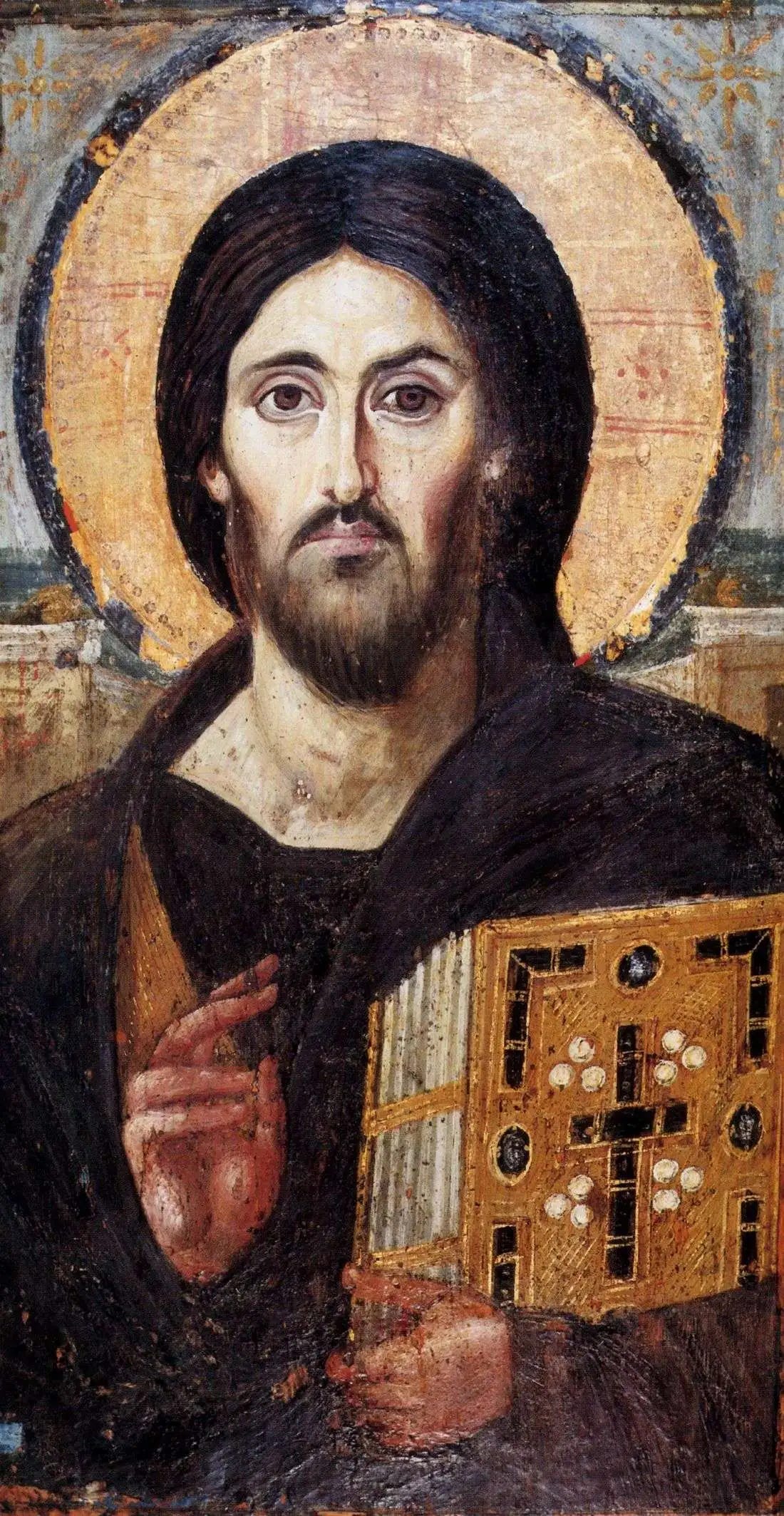
This image is the oldest known example of “Christ Pantocrator” in the world. The different expressions shown on the right and left sides of Jesus’ face may suggest his double nature as both human and divine. It was painted on a wooden board during the 6th or 7th century and is currently preserved at the Monastery of St. Catherine on Mount Sinai, in Egypt, one of the oldest monasteries in the world.