

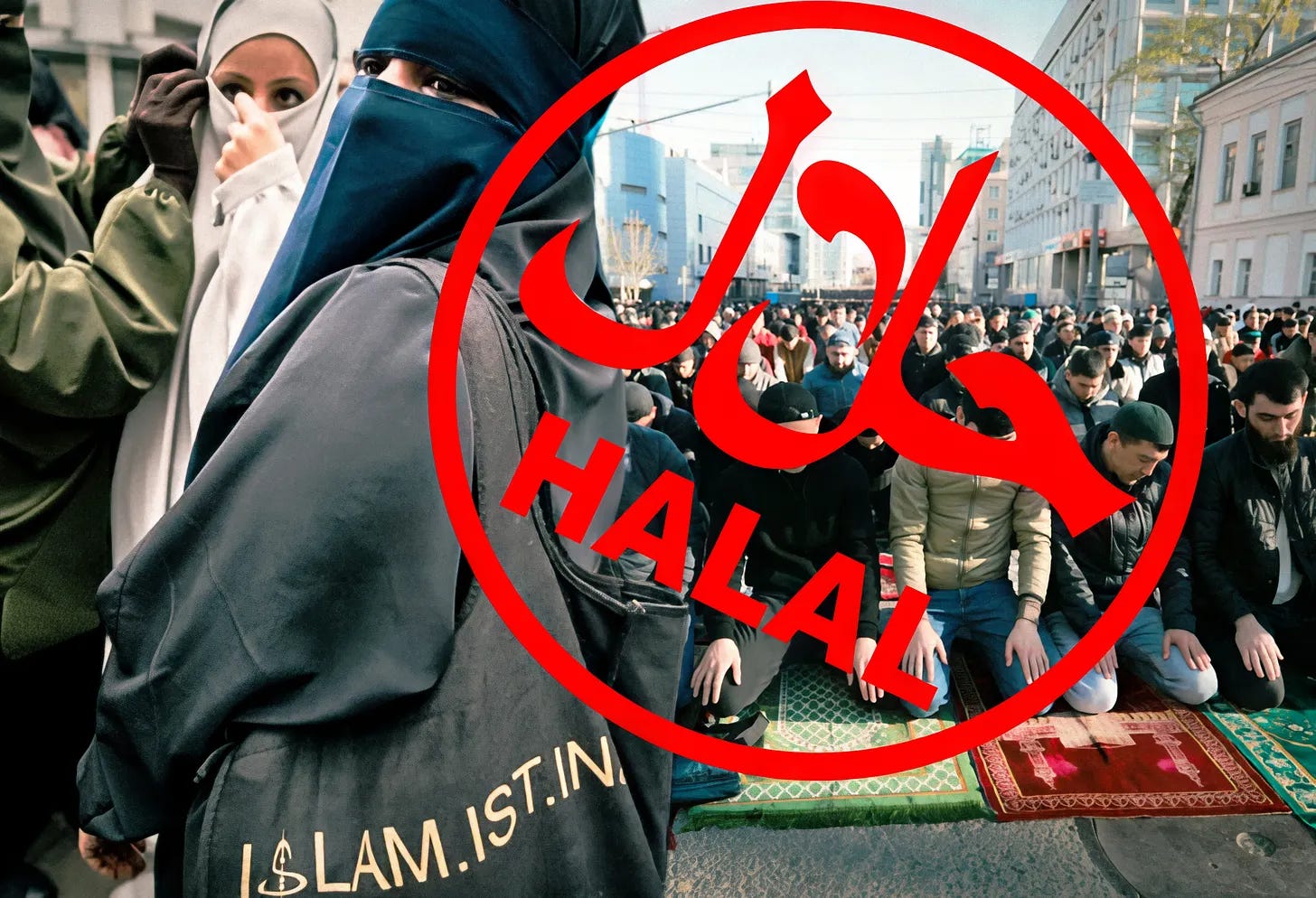
A multiethnic society brings different people into a common culture. Multiculturalism deconstructs that common culture and, in the case of Islam, legitimises separation. Other major immigrant communities integrated. The Muslim community built a parallel society—and it has proved remarkably rigid.
Halal and haram no longer govern only the believer’s plate when parents demand halal food and the removal of pork from school menus, and Muslim pupils pressure classmates to throw away sandwiches during Ramadan.
Middle Eastern history confirms what critics smeared as Islamophobes have warned for years: once an Islamic community becomes large and concentrated enough to sustain its own schools, clerics, charities, businesses, media and political representatives, private belief becomes organised power. First it withdraws. Then it builds. Then it bargains with the state. Finally, it demands that the state change.